


Interview: Revolver
Following on from Revolver’s recent Nottingham performance, I was pleased to catch up with frontman Mat Flint regarding the band’s recent reformation, as well as its history. Throughout the conversation, he has an optimistic, confident and polite demeanour, and seems more than excited that life and circumstance has returned him to the pioneering shoegaze band he first formed as a teenager. Throughout the conversation, we touched upon the past, present and future of the music industry and, in particular, the changing nature of music consumption in a digital landscape, and the shoegaze label his band was initially assigned at its inception.

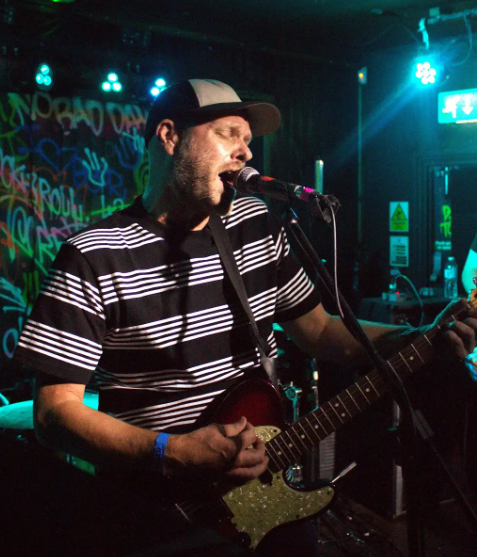
The other week’s Revolver show was the band’s first Nottingham performance since the early 1990s, and so I begin our interview by asking if Flint can remember where they last performed: he recalls that it was in Rock City, but “not the main room” - today, that would presumably be either the Beta Lounge or Black Cherry Lounge, both of which are still as boiling and cramped today as he recalls the room as having been. He notes that a lot of shows merge into memory with time, particularly seeing as he’s played in other bands in the years between iterations of Revolver. However, one memory of that night does stand out to him: there was an indie disco in the main room whilst Revolver were performing. To him, this is indicative of the strange trajectory that the band took: they shot upwards very quickly, being one of the bands that first received the shoegaze label in the early 1990s, before people very suddenly moved on to other things: Britpop, 90s strains of dance music, and, perhaps the genre most promoted as shoegaze’s opposition, grunge. He also notes that it wasn’t particularly busy, and that there were probably more people at Billy Bootlegger’s to see them recently: between older fans who are happy to see them return, newer fans, and everybody involved in music around Nottingham, who have come to recognise the Some Velvet Evening nights as promoting quality bands. Flint’s thoughts on the shoegaze label have also changed over the years - when I ask him how the label thought at the time, he states that it “Felt horrible” at the time, but nowadays he couldn’t care less. It felt different at 19 to how it does today, he clarifies, and he also mentions that he can increasingly see what the press were actually trying to say with the label: “Really, it was just a long-winded way of saying that we’d all listened to the same records when we were 16, and I probably should have been happy that we were being compared to so many great bands!”
It definitely helps that shoegaze has become a bigger movement than the derisive media headlines would have led you to believe was ever possible: with fellow early shoegazers My Bloody Valentine heading out for a comeback arena tour in a matter of weeks, for instance. There are also newer bands taking cues from the sound: one that Flint likes in particular is NewDad, who he hears on 6 Music a lot. He also finds that the newer wave of bands in this vein are keen to experiment and mesh the shoegaze sound with something else entirely, such as goth, punk, or grunge, which he likes as it’s proof of a wide curriculum of listening and influences, and keeps things interesting. Much of the return of interest in these genres of music has been driven by digital culture: for instance, Slowdive tracks such as When the Sun Hits and Alison have been chopped into fifteen-second segments for consumption on TikTok tens of thousands of times each, at once introducing a new generation to the band and the genre and possibly raising questions about the disposability of music. For Flint, he “wouldn’t complain, obviously” if a Revolver song exploded on TikTok and he was able to massively extend his audience, but he doesn’t think it’s ideal that music consumption has been reduced to the point where people have the option to not even listen to an entire track, let alone an album. Curious about my perspective on this, he asks me how I feel about streaming, and I say that I more or less agree with him, even as a digital native. Short-form content can be a great method of discovering music, however I believe that it should operate as a “Try-before-you-buy”, similarly to music-based TV shows in the pre-internet era: though unfortunately, the convenience of the “trying” part has led to a decline in the buying, producing a far more hostile environment for artists to survive.

“Really, [shoegaze] was just a long-winded way of saying that we’d all listened to the same records when we were 16, and I probably should have been happy that we were being compared to so many great bands!”
This cultural moment of renewed interest in shoegaze would have itself, of course, provided ample ground for Revolver to return, but it seems far more like a series of coincidences than any attempt at capitalising on hype. Flint mentions that it’s effectively been a spiral effect: during lockdown, when we each had limitless opportunities for creation and reflection, he began to perform acoustic versions of Revolver classics online, having previously believed the band to be in the past. From there, one thing led to another, and when the world was in its intermediate stage between closing and re-opening, he was invited to begin performing these acoustic renditions for a live audience. With a newfound fondness for the songs having previously not listened to them for years, the idea of performing them with a full band came to him, and funnily enough, the music scene in Nottingham has come to have a major impact. He first reached out to Revolver’s new drummer, Chris, formerly of local legends Six by Seven, who he had worked with before, asking him to try playing some old songs. The bassist, Rich, meanwhile, also performs in the Nottingham-based Stereopium who performed on the same night as Revolver: they did not know each other before, and reached out to one another online. The trio have rehearsed shockingly little thus far: I’m surprised to learn that they’ve probably done only five or six rehearsals, alongside the performances they’ve done so far, less than would have probably been average. However, he notes that there’s clear “telepathy” between them from these rehearsals, and they can increasingly pick up on what each other needs on stage without speaking. Overall, it’s going well for them, and the consensus is excitement about what the future of the band holds.
Despite having been involved in at least one musical project at any moment in the interim years between iterations of Revolver, most notably Death in Vegas, Flint has found it refreshing to return to a point of creative control: “It’s nice to play my own songs again”. Speaking of the future, Flint ends the interview by noting that there’s a variety of things in the pipeline from here: there’s interest in re-releasing Revolver’s 1990s albums, more shows, and potentially new material to look forward to. Overall, there’s a clear sense of hope and excitement running through the conversation, and a reminder that life and music can take directions and turns which won’t have always been anticipated.
Liz Clarke
Edited by Liz Clarke
Photographs by Elliot Cook


Comments